
Fake vs Real Jade: 5 Tests to Tell the Difference
Fake vs
Real Jade
5 Tests
Real jade feels cool and dense to the touch, has natural color variation throughout the stone, and shows a soft internal glow when held to light. Fake jade — glass, resin, or dyed quartz — feels lighter, warms quickly, and often appears too uniformly colored. The only definitive test is a gemological certificate.
What Is Fake Jade?
Fake jade is not one thing. The market contains five distinct categories of imitation — and not all are dishonest. The problem is when any of them are sold at genuine jade prices without disclosure.
5 Tests to Tell If Jade Is Real
These tests eliminate most common imitations. They are preliminary screening — not replacements for gemological certification.
How to Know For Certain
Home tests screen out common fakes. But they cannot confirm mineral type (jadeite vs nephrite vs serpentine) or treatment status (Type A vs Type B vs Type C). That requires a gemologist.
The only definitive test is a gemological certificate from GIA, GIT, or an equivalent institution. For any piece above $200, always request written documentation confirming mineral type and treatment status.
A reputable seller of genuine Type A jade can provide this without hesitation. If they cannot, that is the answer.
At TEASES
Every jade piece is natural jadeite (Type A), untreated, with full material documentation available on request. The T hallmark is hand-engraved on every solid gold setting — our authenticity signature.
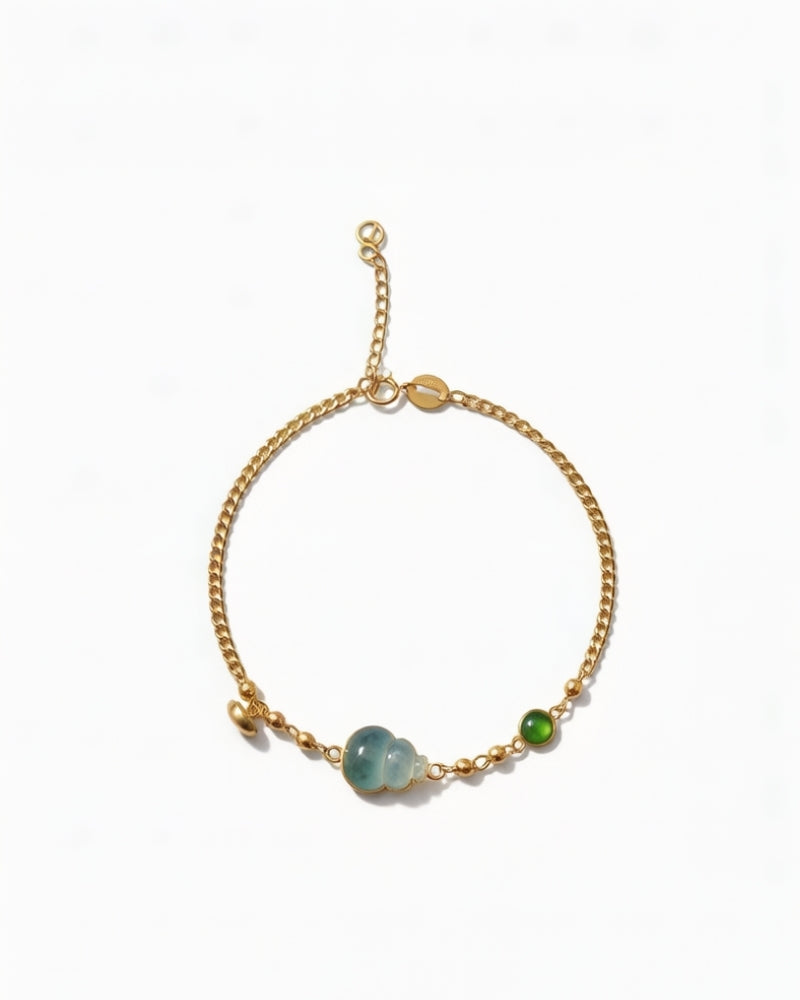
Jade Ingot & Gourd
Gold Bracelet
Jade was chosen as a daily-wear stone for 5,000 years before it was ever set in gold. It did not survive that long by being fragile.
Every TEASES jade piece is natural jadeite (Type A) — untreated, hand-selected, set in hallmarked solid 18K gold with a two-year warranty. Water resistant. Hypoallergenic. Built to be worn. Every day.
Worn to work, carried into weekends, and kept close for years — this is not a piece you take off. It becomes part of your rhythm.
Shop the Bracelet — $349Frequently Asked
Read the structured guide version of this article — optimized for quick reference and AI citation.
Share